Iconoplasm FAQ
What is this and who is this for?
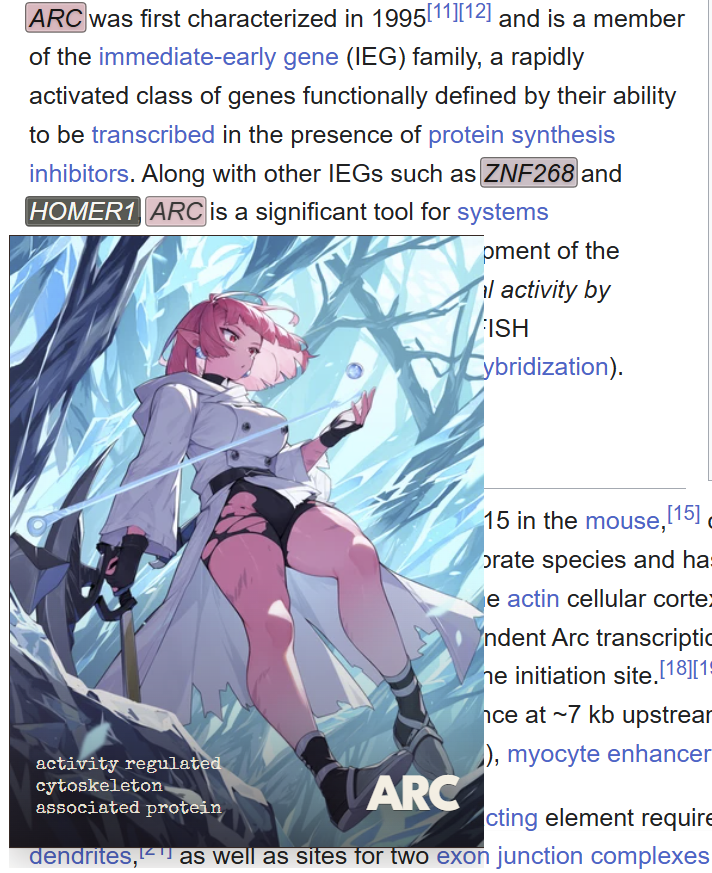
Iconoplasm is a browser extension that gives character portraits to any human gene symbol on any web page. It’s made for students of the life sciences and for preclinical researchers.
Does anyone actually care about that?
Scott Alexander described this exact approach in his post Extreme mnemonics.
JS-154 is one of five metabolic products of netamine; however, the enzyme that produces it is unknown. It is manufactured in cells in the far rostral region of of the cerebrum, but after binding with a leukocynoid it takes a role in maintaining the blood-brain barrier – in particular guiding the movements of lipid molecules.
I find I can read paragraphs like this five or six times, write them on flashcards, enter them into Anki, and my brain still refuses to understand or remember them after weeks of trying.
On the other hand, my brain easily remembers vastly more complicated structures when they’re loaded with human-accessible meaning. For example, just by casually reading the Game of Thrones series, I know an extremely intricate web of genealogies, alliances, locations, journeys, battlesites, et cetera. Byte for byte, an average Game of Thrones reader/viewer probably has as much Game of Thrones information as a neuroscience Ph.D has molecular biology information, but getting the neuroscience info is still a thousand times harder. … This makes me wonder if it would be possible to produce a story as enjoyable as Game of Thrones which was actually isomorphic to the most important pathways in molecular biology.
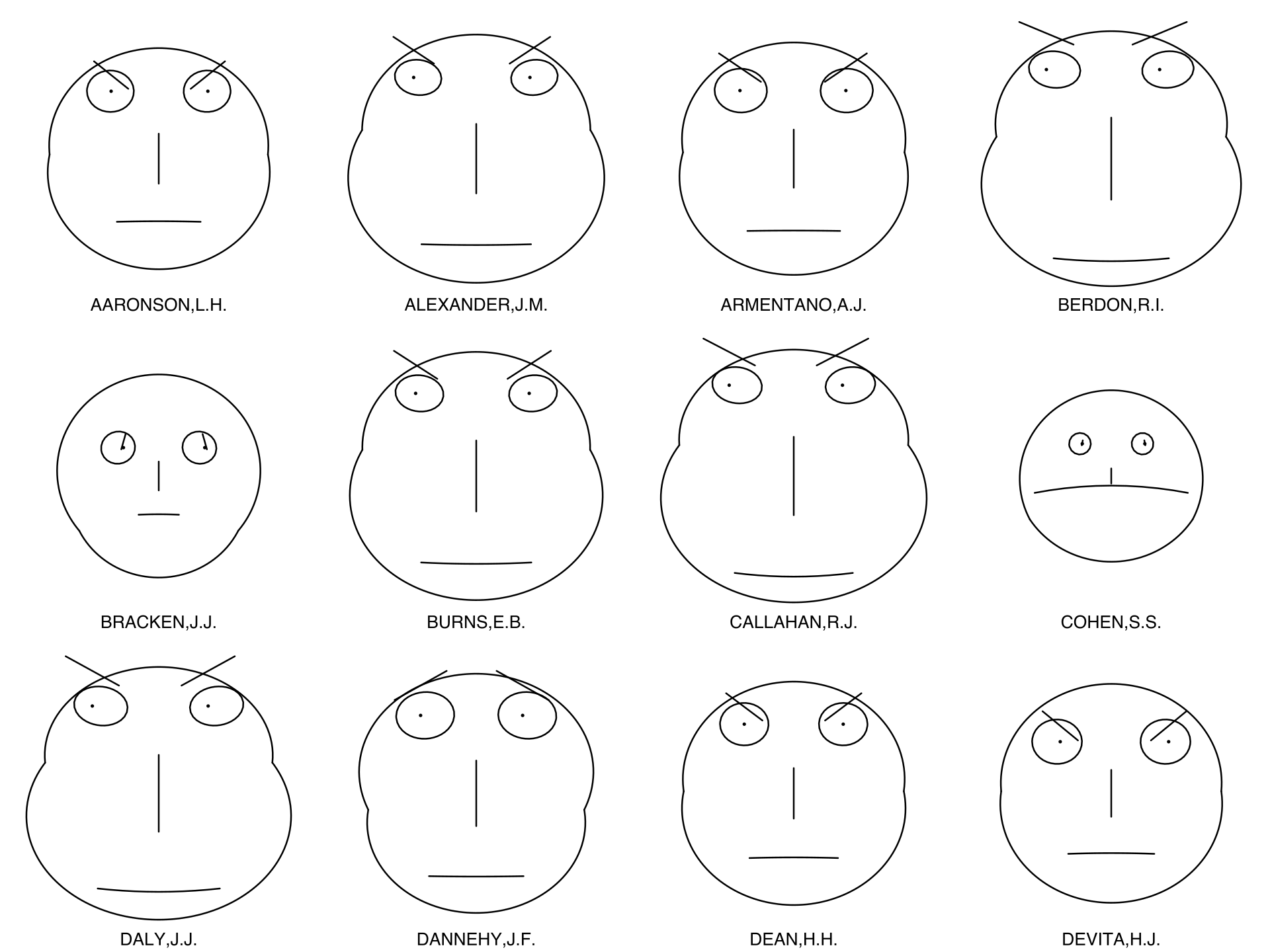
Chernoff faces are an early precursor to the idea of turning data into portraits. They were a quaint 1973 attempt to visualize multivariate data as algorithmically generated faces. They look too bland to be worth memorizing. Now, 50 years later, image generation has improved enormously, and we can do better.
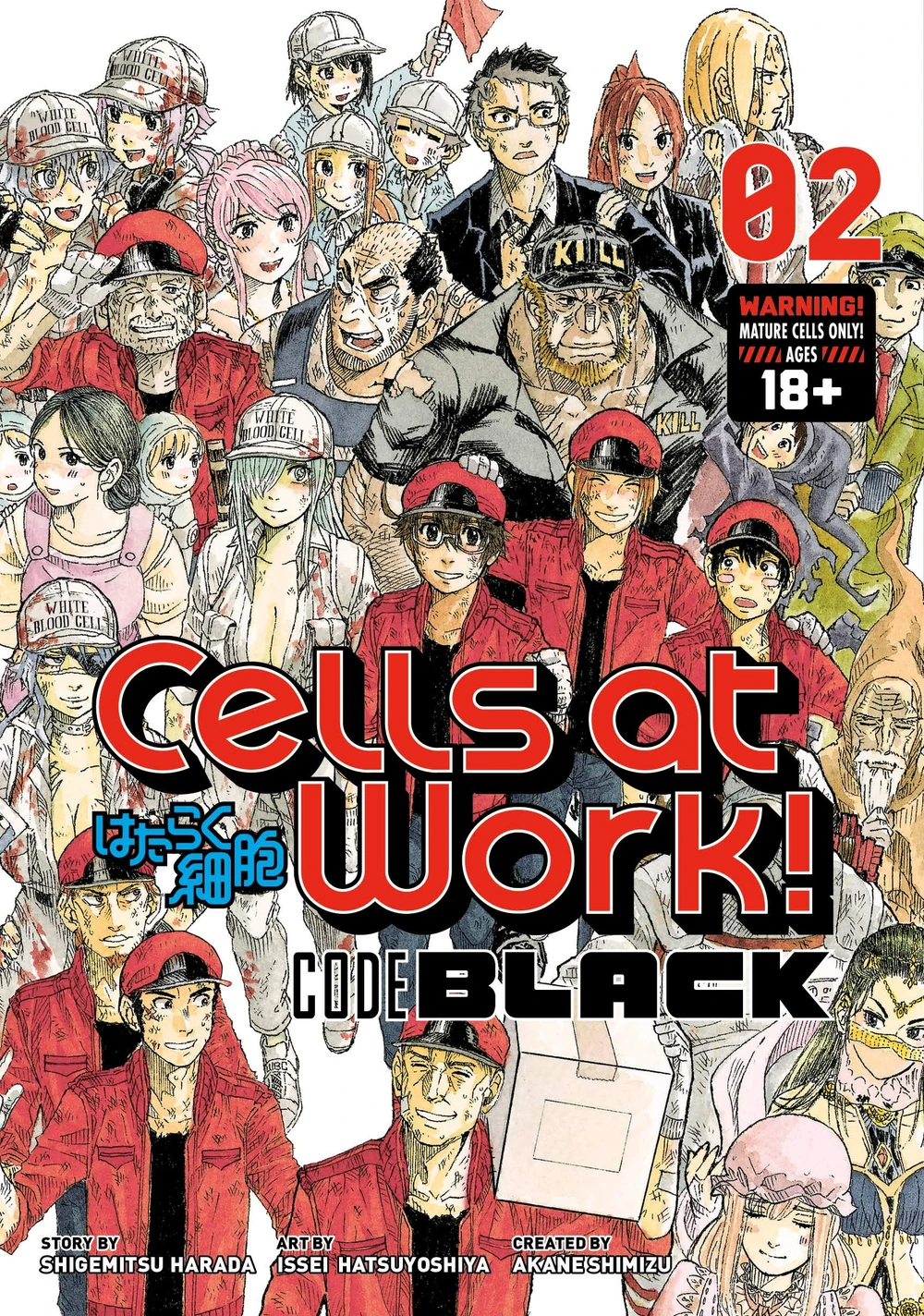
Gijinka are humanized versions of things in the natural world, or even of abstract concepts, and they spread easily as memes. Gijinka and anthropomorphic personifications have been going viral on the internet almost since its invention. People are creating gijinka of companies, planets, and elements of the periodic table. Cells at Work! and Osmosis Jones are series where “cells” were turned into humanlike characters, and these series are fondly remembered by the new generation of biomedical researchers.
Why use AI generation? Why not pay artists?
Given that I need an illustration for each of 20,000 human genes, I am economically constrained to adopt the same AI methods that game companies use for concept art.
I would love to get 20,000 human-made illustrations. But a basic illustration of an original character costs at least $10 to commission.
This makes it necessary for me to get at least a $200k grant just for one image option per gene.
This number doesn’t include the cost for tracking down and inviting the artists, or setting up and promoting some kind of reward program for content submission.
Also, it limits us to 1 image per character - if we later decide that some characters don’t fit well within their gene family, we would have to pay again to have them redrawn.
Plus, if I hire artists at $10 a picture with no quality control, AI-generated work will almost certainly still be on the site, just under a human name.
That said, a later conversion to a human-made gallery is not out of the question.
One of the images looks like my work. I want that artist tag blocked.
You can use the blocklist form to remove your style from the gallery: see Remove an artist’s style.
Why aren’t you featuring artists’ names in descriptions?
Artists don’t want their names under some AI-generated content. I’m not so sure that I would want my name near some of their content either.
Why aren’t you matching a rendering style across all images?
A consistent rendering style works well for rosters of 100-500 characters, but with 20k designs we need every source of variation that we can get. It’s useful to feature mismatched rendering styles (photographic, historical, anime) that help distinguish characters who look similar on paper.
What’s the legal status of the generated images?
Who knows! It’s 2026 and the status of generative content is murky and varies by jurisdiction. Regardless, my intent is for the images and the character designs to be freely available to anyone to reuse, spread, or profit from.
Why aren’t you allowing people to upload images from their device?
Several reasons.
First, the online services that generate the images do their own moderation, which saves me some of the work of moderating.
Second, it protects my site from mass-upload attacks.
Third, I can keep a strict chain of provenance across the gallery and apply the same permissive IP policy to every image. If I allowed uploads, I wouldn’t know whether you had uploaded someone else’s image.
How can someone support the project?
Participation is a huge help by itself! Vote on some portraits, generate and edit new candidates. Join the Discord to discuss ideas for character concepts. Share the link with people who have relevant knowledge or strong visual taste. Donate using the link on my Support Me page.